 EN
EN



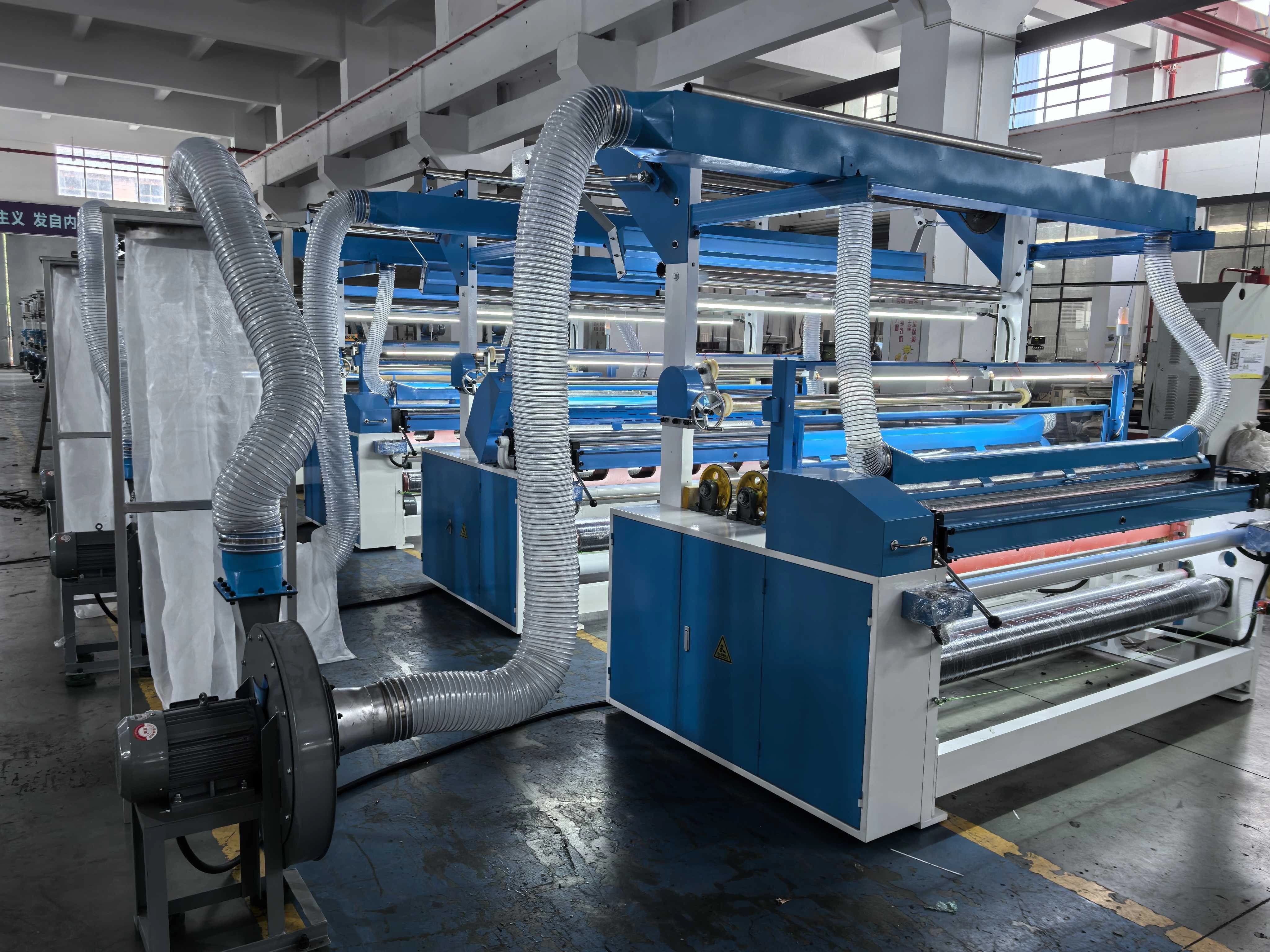
Understanding the Role of a Corduroy Cutting Machine in Fabric Quality and Efficiency
How the corduroy cutting machine shapes the final fabric characteristics
Corduroy gets its distinctive ribbed look because cutting machines slice those vertical wales right into the raised pile fibers. When blades stay sharp within about 0.01mm accuracy and tension controls work properly, the cuts come out even across the whole fabric. This matters a lot for how soft it feels, how long it lasts, and whether all the ribs look consistent throughout. Newer machines equipped with lasers actually cut down on pile distortion problems by around 43 percent when compared to old fashioned manual techniques. A recent article from the Textile Engineering Journal backs this up, looking at how automation has changed things in cutting operations over the past few years.
The connection between pile cutting and corduroy manufacturing process efficiency
Optimal cutting parameters reduce fabric waste by 18% while sustaining production speeds of 12–15 meters per minute. Synchronized blade movements help operators achieve 99.2% defect-free output, essential for fast-fashion timelines. Facilities using real-time pile height sensors report 22% fewer downtime incidents annually.
Shearing vs. precision cutting: Why rotary knives matter in corduroy production
| Method | Key Advantage | Impact on Quality |
|---|---|---|
| Traditional Shear | Lower upfront costs | 15% higher fraying risk |
| Rotary Knife | Micro-adjustable spacing (±0.05mm) | 0.3mm pile consistency |
Rotary knife systems dominate high-wale corduroy production, delivering over 1,200 cuts per minute without fiber tearing. As demonstrated in precision fabric cutting techniques, circular blades minimize edge distortion—critical for maintaining the 27°–32° wale angle that defines premium corduroy drape.
Core Components That Define High-Performance Corduroy Cutting Machines
Rotary Knives and Guide Needles: Core Machinery Used in Corduroy Production
Precision-engineered rotary knives and guide needles form the operational core of corduroy cutting machines, ensuring clean separation of piled yarns. Blade sharpness affects defect rates by up to 40%, with dull edges causing fraying and over-sharpened blades compressing wales, according to the Textile Research Journal (2022).
Material Durability and Blade Alignment in Maintaining Consistent Wale Patterns
High-grade tungsten-carbide blades resist wear during continuous operation. Proper alignment within ±0.01 mm tolerance prevents wale pattern deviations. Manufacturers using laser-guided calibration report 92% fewer alignment-related stoppages than those relying on manual methods.
Automated Tension Control Systems for Uniform Pile Height
Servo-driven tension regulators adjust fabric strain 200 times per second, keeping pile height variation below ±0.15 mm. This precision eliminates the “striping effect” in wide-wale corduroy, which previously led to 18% material waste in conventional setups, per Global Textile Trends (2023).
Integration With Upstream Looms and Downstream Finishing Lines
Seamless data exchange between cutting machines and ERP-enabled looms reduces setup time by 65%. Integrated conveyors transport fabric post-shearing to brushing stations while preserving directional pile orientation—essential for achieving corduroy’s signature luster.
Matching Machine Capabilities to Corduroy Wale Types and Production Needs
Matching Corduroy Cutting Machine Settings to Wale Density (Fine, Medium, Wide Wales)
The relationship between blade geometry, shear intensity, and wale density is pretty critical when it comes to maintaining consistent results. For those finer wales that range from 18 to 21 ribs per inch, manufacturers really need to get down to the micron level with their precision work, running machines at around 1,200 to 1,500 RPM. On the other hand, wider wales between 3 and 10 ribs per inch call for slower speeds somewhere between 400 and 600 RPM, but the knives need reinforcement since these cuts go much deeper into the material. When things don't match up properly, there's a significant problem with thread breakage rates jumping as high as 29% during fine wale production. A recent industry report from textile manufacturing circles backs this up, showing how important proper configuration actually is for quality control.
Adjustable Blade Spacing for Versatile Corduroy Wale Variations and Types
Machines with 0.1–5 mm adjustable blade spacing allow quick transitions between wale types without hardware changes. A 0.3 mm setting produces tightly ribbed velveteens, while 4.5 mm creates bold 1970s-style wide wales. PLC programming reduces changeover time from 45 minutes to under 7 minutes per batch.
Case Study: Reducing Defect Rates by 37% Through Optimized Wale Calibration
An ISO 9001:2015-certified textile plant reduced defect rates from 12% to 7.5% in six months using AI-assisted wale calibration. Sensors detect tension variances of ±0.8N and automatically adjust blade height to maintain 1.2–1.5 mm pile depth. Real-time correction eliminated 92% of “wale skip” flaws.
Key Results After Calibration
| Metric | Before | After | Improvement |
|---|---|---|---|
| Defective yards/shift | 48 | 30 | 37.5% |
| Energy use per yard | 0.72 kWh | 0.61 kWh | 15.3% |
| Scheduled downtime | 14 hrs | 9 hrs | 35.7% |
Optimizing Operational Factors for Superior Corduroy Texture and Quality
Impact of Cutting Speed on Pile Integrity and Surface Smoothness
Cutting speeds between 10–15 m/min preserve pile structure and achieve 98% surface smoothness, per Textile World (2022). Exceeding 20 m/min increases fraying risk by 40% due to disrupted wale alignment. Advanced models feature adaptive speed controls that respond to fabric thickness and wale density.
Minimizing Fiber Damage Through Precise Blade Synchronization
Laser-guided synchronization ensures rotary blades operate within 0.02 mm precision, reducing fiber breakage by 60% compared to manual methods (Textile Research Journal, 2023). Dual-stage alignment maintains less than 1% deviation in pile height across all wale types.
Environmental Controls (Humidity, Temperature) in Preserving Fabric Characteristics
- Humidity levels of 45–55% prevent static buildup that distorts wale patterns
- Temperature stabilization at 20–24°C limits post-cutting shrinkage variance to 0.3%
These conditions lower defect rates by 28% in high-density corduroy production, based on Clothing Industry Report (2021) data.
Evaluating Leading Corduroy Cutting Machines and Future Automation Trends
Leading models featuring advanced shearing and pile regulation technology
Modern corduroy cutting machines integrate servo-controlled rotary blades with ±0.05 mm precision over 15-hour runs. According to the 2024 Fabrication Technology Report, these systems use laser-guided tension sensors to dynamically adjust pile height, handling delicate 240 GSM fabrics while preserving wide-wale ridges. Top-tier units achieve 98.7% first-pass yield, a 19% improvement over prior generations.
User-reported reliability and maintenance frequency across brands
Field data from 86 textile plants shows German-engineered cutters require 42% fewer blade replacements in heavyweight applications. Southeast Asian manufacturers, however, report 23% lower downtime for mid-range wale densities (8–12 ribs/inch), thanks to modular designs enabling 90-minute component swaps.
Cost-benefit analysis of German-engineered vs. Asian-manufactured units
European machines carry 35–50% higher initial costs, but their 10-year ownership expenses average $740k (Ponemon, 2023), compared to $1.2M for frequently replaced Asian models. The gap narrows for narrow-wale specialists, where Taiwanese units offer 18% faster ROI via drive systems optimized for 20+ daily fabric changes.
AI-driven monitoring for real-time pile consistency adjustment
Next-gen systems employ AI-driven computer vision to analyze 4,300 pile fibers per second, automatically correcting blade angles to maintain ±2% wale uniformity. Early adopters see 37% fewer quality rejects, especially when switching between static-prone organic and synthetic blends.
Predictive maintenance in corduroy cutting machine operations
Vibration sensors predict bearing failures 80 hours in advance with 94% accuracy. This prevents catastrophic seal failures during high-speed cotton runs, saving an estimated 18,000 liters of hydraulic fluid annually per machine.
Sustainable energy use and waste reduction in next-gen cutting systems
Regenerative braking recovers 22% of motion energy (Textile Sustainability Institute, 2023), while vacuum-assisted modules capture 98% of offcuts for recycling. These innovations reduce fabric waste to 1.2 yards per 1,000-yard bolt—down from 4.8 yards in conventional setups.
FAQ
How do corduroy cutting machines contribute to fabric quality?
Corduroy cutting machines enhance fabric quality by precisely slicing the vertical wales, maintaining consistent texture, softness, and longevity in the fabric.
Why are rotary knives important in corduroy production?
Rotary knives allow for micro-adjustable spacing and pile consistency, significantly reducing fraying risks and ensuring high-quality fabric production.
How does cutting speed affect corduroy production?
Optimal cutting speeds (10–15 m/min) maintain pile integrity and ensure smooth fabric surfaces, while speeds above 20 m/min increase fraying risks.
What role do environmental controls play in corduroy production?
Maintaining appropriate humidity (45–55%) and temperature (20–24°C) prevents defects and ensures high-density corduroy production quality.
Table of Contents
- Understanding the Role of a Corduroy Cutting Machine in Fabric Quality and Efficiency
- Core Components That Define High-Performance Corduroy Cutting Machines
- Matching Machine Capabilities to Corduroy Wale Types and Production Needs
- Optimizing Operational Factors for Superior Corduroy Texture and Quality
-
Evaluating Leading Corduroy Cutting Machines and Future Automation Trends
- Leading models featuring advanced shearing and pile regulation technology
- User-reported reliability and maintenance frequency across brands
- Cost-benefit analysis of German-engineered vs. Asian-manufactured units
- AI-driven monitoring for real-time pile consistency adjustment
- Predictive maintenance in corduroy cutting machine operations
- Sustainable energy use and waste reduction in next-gen cutting systems
- FAQ