 EN
EN



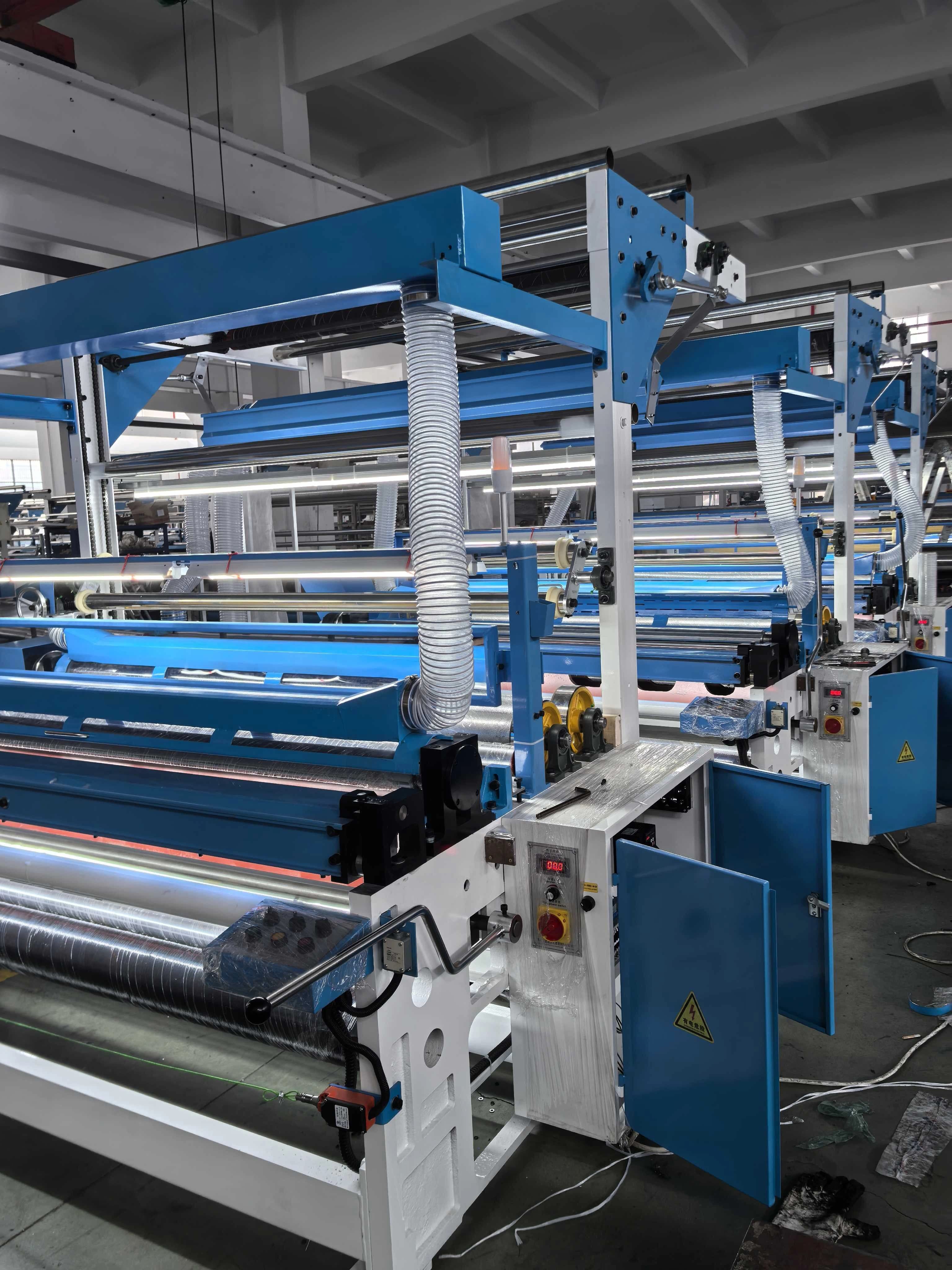
Advancements in Corduroy Cutting Machine Technology
How Innovation in Corduroy Manufacturing Drives Machine Design
The latest corduroy cutting machines do a great job at keeping those distinctive ribs intact while cutting down on fabric waste. New blade designs combined with better tension controls have actually reduced material loss by around 18 percent according to Textile Tech Journal from last year. Manufacturers now run simulations to see exactly how the corduroy behaves when being cut, which helps them line everything up properly with the weave direction. This stops the edges from fraying out or getting all messed up. What we're seeing here is part of a bigger trend in textiles where companies are moving towards greener manufacturing practices without sacrificing quality. The whole industry seems to be chasing higher precision these days as customer expectations keep rising.
Integration of Airo® and Airo®24 Systems for Precision Fabric Processing
The Airo24 system takes corduroy processing to another level by incorporating air jet stabilization technology that keeps those pile heights consistent even when running at top speed. Combine this with the original Airo platform's servo driven feeders and what do we get? About half a millimeter accuracy over fabric lengths reaching right up to 300 meters long. There are these real time thickness sensors too that tweak the cutting pressure as needed. Makes sense really since there's quite a difference in how dense those fine 21 wale fabrics are compared to the heavier 8 wale versions. All this tech working together means better edges all around and less deformation issues, especially noticeable on the more delicate fabrics or ones that have been woven extra tight.
Case Study: Leading Manufacturer's Latest Corduroy Cutter Line
A major Chinese machine maker has rolled out a new corduroy cutting line equipped with some pretty impressive tech specs. The system includes dual laser alignment sensors running at 120 frames per second, along with self sharpening tungsten carbide blades good for around 2000 hours before needing replacement. There are also energy recovery features that cut down on electricity usage by about 22%. When tested throughout 2023, this setup managed to process approximately 12 thousand meters of heavy weight corduroy each day while maintaining an amazing 99.4% defect free rate. That beats old fashioned hydraulic cutters by nearly a third when it comes to overall production speed. What makes these findings so interesting is how focused engineering improvements actually make a difference in both productivity and quality control for manufacturers working with specialized fabrics.
Automation and IoT in Modern Corduroy Production
The Shift Toward Smart Factories in the Textile Industry
Industry 4.0 adoption is now a priority for over 76% of textile manufacturers aiming to optimize corduroy cutting operations (McKinsey 2023). Smart factories leverage interconnected IoT sensors and cloud analytics to achieve 18–22% lower material waste compared to conventional setups. Predictive maintenance routines—synchronized with blade wear data—help prevent unplanned downtime, ensuring continuous operation in high-volume environments without compromising cut precision.
Real-Time Monitoring via IoT-Enabled Corduroy Cutting Machines
IoT-enabled cutters continuously monitor three critical parameters: fabric tension within ±0.3 N, blade temperature maintained at 45–50°C, and submillimeter pattern alignment. According to a 2024 Textile World study, real-time vibration analysis from these systems improves defect detection rates by 34% during high-speed processing. When selvage irregularities are detected in incoming fabric rolls, the system dynamically adjusts cutting settings to maintain edge integrity and minimize waste.
Scaling Data Integration Without Disrupting Legacy Production Systems
Despite the push for digitalization, 68% of mills still rely on pre-2010 equipment (Deloitte 2023). Retrofitting solutions now enable seamless IoT integration through modular edge computing devices that convert legacy machine outputs into standardized OPC-UA protocols. This approach resolves key challenges:
| Integration Challenge | Modern Solution | Efficiency Gain |
|---|---|---|
| Data silos | Unified data lakes | 40% faster analytics |
| Protocol conflicts | API middleware | 92% uptime |
| Skill gaps | AR-assisted interfaces | 55% faster operator training |
By avoiding full system replacements, this phased strategy cuts implementation costs by 27% while maintaining uninterrupted production in established facilities.
AI and Robotics in Corduroy Cutting Operations
Labor Shortages Accelerating Robotics Adoption in Textile Manufacturing
The ongoing worker shortage problem in textile industries worldwide has pushed about three quarters of corduroy makers to bring in robots for their cutting jobs according to Textile World's 2023 report. Most factories are now using those fancy six axis robotic arms that line up fabrics and process batches with almost pinpoint accuracy around 0.2 mm. This means fewer people need to get involved manually, and production speeds jump anywhere from 30% to maybe even close to 50%. What makes these machines so good is their ability to tackle the same task over and over again without mistakes. Workers aren't replaced entirely though they can shift their attention to watching things run smoothly and checking product quality instead of doing all the physical work themselves.
AI-Powered Vision Systems for Flaw Detection in Corduroy Fabrics
Vision systems powered by deep learning technology can now scan corduroy fabric at around 120 frames per second, spotting issues like uneven wale spacing or damaged pile with pretty impressive accuracy - somewhere around 99% mark. When companies switch from manual inspections to this automated approach, they typically see about a 15-20% drop in wasted materials. What's really nice is that these systems don't mess with the fabric's signature ridges during inspection. Catching problems early means factory workers can fix them right away before things get worse further down the line. This proactive approach cuts down on having to redo work later and generally boosts production yields across the board.
Self-Learning Algorithms for Automatic Blade Alignment Optimization
Corduroy cutting machines equipped with reinforcement learning can now tweak their blade angles on the fly when dealing with fabrics of different thicknesses. Some tests run in South Korean textile factories back in 2023 showed pretty impressive results. The machines achieved about 53% better cutting consistency for corduroy ranging from 8 to 21 wales per inch. Plus there was a noticeable drop in how often blades needed replacing - around 22% less frequently. What this means is that these machines become much more adaptable to varying materials without constant human intervention. Over months of operation, companies start seeing lower maintenance bills as well since the blades last longer between replacements.
Case Study: Smart Cutter Deployment in European Textile Facilities
An advanced AI-driven cutter developed by a European machinery leader integrates live yarn tension feedback with predictive maintenance alerts. Over a 14-month deployment, client facilities reported:
| Metric | Improvement |
|---|---|
| Production Downtime | ¼ 41% |
| Energy Consumption/Watt | ¼ 28% |
| Fabric Utilization | ² 19% |
Through dynamic pressure modulation, the system preserved traditional corduroy aesthetics, demonstrating that automation can enhance—not replace—heritage craftsmanship in premium textile manufacturing.
FAQ Section
What advancements have been made in corduroy cutting machine technology?
Recent advancements include improvements in blade design and tension controls, resulting in an 18% material loss reduction. Technologies like Airo and Airo24 have incorporated air jet stabilization and servo-driven feeders, ensuring consistent pile height and accuracy. Additionally, AI and robotics are being adopted to tackle labor shortages and optimize accuracy.
How do IoT and automation enhance corduroy cutting processes?
IoT sensors and cloud analytics lower material waste by 18–22% and allow for predictive maintenance, reducing downtime. Real-time monitoring ensures precision, and integration with legacy systems through retrofitting cuts costs while enhancing operational efficiency.
How do AI-driven vision systems improve corduroy inspection?
AI-powered vision systems enhance flaw detection accuracy to around 99% by scanning fabric at high speeds. This reduction in inspection errors leads to a 15-20% decrease in wasted materials.
What role do robotics play in modern textile manufacturing?
Robotics, especially six-axis robotic arms, enhance precision and speed in fabric alignment and processing. They help mitigate labor shortages by performing repetitive cutting tasks with high accuracy, improving overall production efficiency by 30-50%.
How are self-learning algorithms used in corduroy cutting machines?
Self-learning algorithms adjust blade angles automatically for different fabric thicknesses, improving cutting consistency by 53% and extending blade life by 22%.
Table of Contents
- Advancements in Corduroy Cutting Machine Technology
- Automation and IoT in Modern Corduroy Production
- AI and Robotics in Corduroy Cutting Operations
-
FAQ Section
- What advancements have been made in corduroy cutting machine technology?
- How do IoT and automation enhance corduroy cutting processes?
- How do AI-driven vision systems improve corduroy inspection?
- What role do robotics play in modern textile manufacturing?
- How are self-learning algorithms used in corduroy cutting machines?