 EN
EN



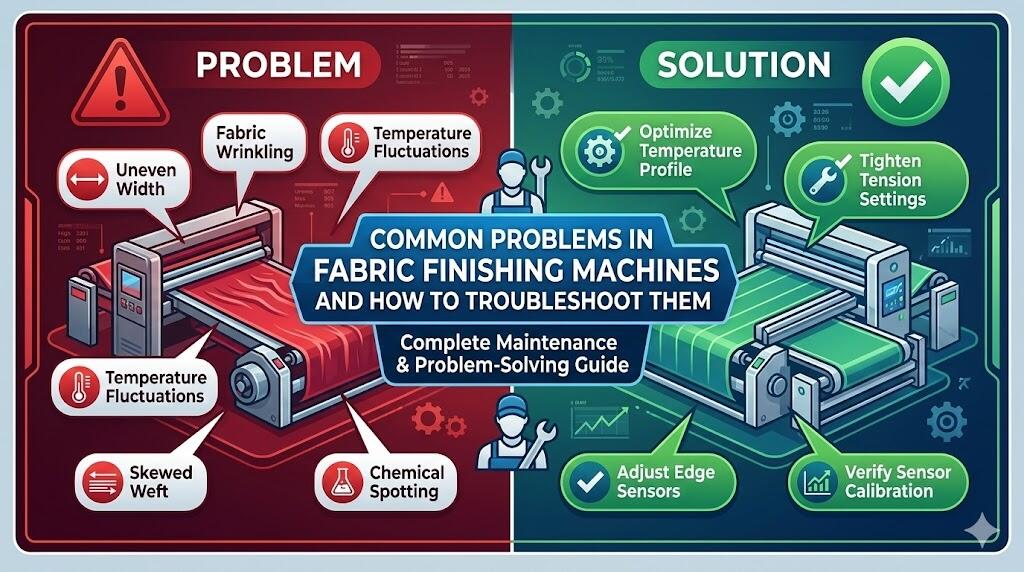
Electrical & Drive System Failures in Fabric Finishing Machines
Inverter Overheating and Power Instability: Causes and Mitigation
Overheating problems in inverters usually come down to two main factors poor ventilation and constant temperature changes. These conditions speed up the drying out of capacitors and wear down those solder joints over time. When this happens, the ability to store charge drops significantly around 40% in many cases while electrical resistance goes up. This leads to voltage drops that mess with fabric tension control systems in production lines. Dust is another big issue that makes things worse. Plants dealing with lots of airborne particles tend to see about 30% more motor drive failures compared to cleaner environments. To combat these problems, regular maintenance matters a lot. Cleaning heat sinks every three months helps keep things running smoothly. Keeping the surrounding temperature under 40 degrees Celsius is also critical. Some plants have started adding harmonic filters which cut down on voltage distortions. Studies published last year showed that improving airflow paths alone can slash inverter failures by nearly two thirds, making a real difference in maintaining consistent power supply needed for quality finishing work.
PLC Communication Breakdowns: Ground Loops, Cabling, and I/O Timing Issues
Most problems with PLCs actually come down to those pesky ground loops that create all sorts of signal noise and mess up the communication between sensors and actuators. When we're dealing with areas full of electromagnetic interference, the situation gets worse if the cabling isn't properly shielded or terminated correctly. This leads to timing issues where drying cycles get out of sync with roller movements. Some studies point to around 70% of these timing problems being caused by bad cabling work, though exact numbers can vary depending on the facility. To fix things, there are basically three main steps operators should take first. Install proper grounding systems with resistance below 0.1 ohms is one thing. Swapping old ribbon cables for twisted pair versions helps block interference better too. And don't forget regular signal delay checks during routine maintenance periods. Facilities that implement real time input/output monitoring report cutting downtime related to timing errors by about half, which makes a big difference when working with sensitive materials that require precise handling.
Mechanical & Thermal Process Deviations in Fabric Finishing Machines
Fabric Damage from Thermal Gradient and Nip Pressure Misalignment
Critical failure modes include:
- Thermal Stress Fractures: Micro-tears in polyester blends under uneven >185°C exposure
- Compression Marks: Permanent indents on knits and technical textiles from over-pressured nips
- Edge Curling: Selvage deformation triggered by temperature differentials exceeding 8°C/meter
Calibration must hold roller temperature variance within ±5°C and maintain nip pressures at 18–22 N/mm² for standard woven substrates. Real-time infrared monitoring paired with servo-controlled hydraulic systems prevents these deviations, cutting fabric waste by up to 40%.
Production Efficiency Losses in Fabric Finishing Machines
Throughput Bottlenecks: Dwell-Time Inconsistency and Moisture-Sensitive Process Lag
When fabrics spend different amounts of time during important steps such as drying or applying resins, this creates problems in manufacturing. Usually, this happens because the conveyor belt moves at inconsistent speeds or sensors aren't calibrated properly. At the same time, processes sensitive to moisture run into delays whenever the air gets too humid or dry beyond what's acceptable (about plus or minus 5% from ideal levels). This change affects how thick the resin becomes and forces workers to step in manually. According to studies done in textile engineering, all these combined problems can actually cut down on factory output by somewhere between 12% and 18%. That's a significant drop for any manufacturer trying to maintain efficiency.
Solutions include:
- Real-time monitoring systems that auto-adjust conveyor speeds based on fabric density and line load
- Environmental controls holding humidity within ±2% of setpoint
- Quarterly calibration of infrared moisture sensors to eliminate false readings
- Standardized preconditioning protocols before finishing stages
Operational data confirms these interventions reduce process lag by 40% and improve throughput consistency by 28%. Proactive tuning of timing mechanisms and moisture controls consistently delivers higher ROI than reactive corrections post-defect.
Environmental Contamination Risks for Fabric Integrity
Dust, Condensation, and Roller Marking on Delicate Blends
Getting environmental contaminants into delicate fabric blends like chiffon, microfiber, and silk during finishing processes can really mess things up. Dust particles tend to stick to these porous materials, creating unsightly stains and making the fabric feel rougher than it should be. When there's an 8 degree Celsius difference between machines and the surrounding air, condensation starts forming. This leads to water spots that actually weaken the fibers themselves, sometimes reducing strength by as much as 20% in materials that absorb moisture easily. Then there's the problem of roller marks, which leave behind those annoying permanent impressions on lightweight fabrics whenever the pressure goes over 15 pounds per square inch or dirt gets stuck between rollers. These issues aren't just theoretical concerns for textile manufacturers either.
Proven contamination controls include:
- HEPA filtration capturing 99.97% of airborne particulates
- Climate systems maintaining ambient humidity below 55% RH
- Bi-weekly roller inspections for scratches, embedded debris, or wear anomalies
These measures preserve fabric integrity across the finishing workflow and lower defect rates by 30–40% in third-party quality audits.
FAQ Section
What causes inverter overheating and power instability?
Inverter overheating and power instability are typically caused by poor ventilation and constant temperature changes, which can speed up the drying out of capacitors and wear down solder joints.
How can PLC communication breakdowns be addressed?
PLC communication breakdowns can be addressed by installing proper grounding systems, swapping old cables for twisted pair versions, and implementing real-time input/output monitoring.
What are the primary environmental contamination risks for fabric integrity?
Main risks include dust, condensation, and roller marking, which can create stains, weaken fibers, and leave permanent impressions on delicate fabrics.